In today’s ever-changing industry landscape, precision and strength are two pillars that cannot be compromised. From the automotive industry to construction sites, manufacturing plants and household appliances the production of durable and dependable parts is important to the success of quality products. This is the area where sheet metal component job work is needed. For anyone dealing with the engineering and manufacturing industries, it is ensured that anytime they need cost-friendly, customisable and durable parts, sheet metal will be their first option.
In this blog we will go through the entire process of sheet metal component job work from start to finish.
Sheet metal component job work
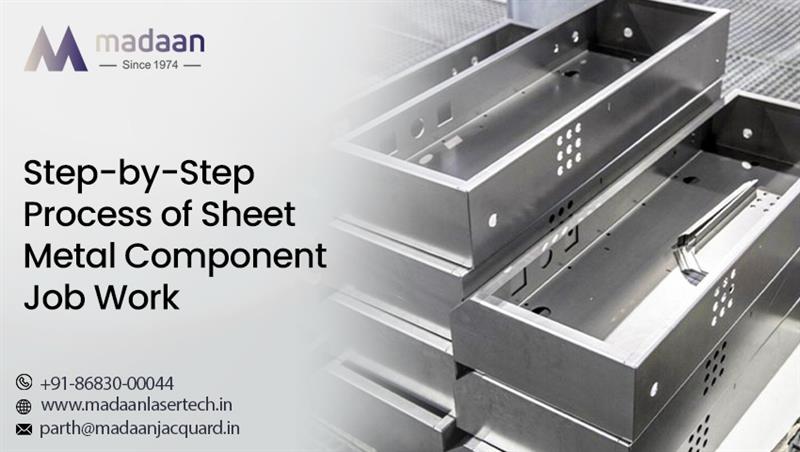
It is the work done when metal sheets are cut, bent, punched and assembled into specific parts according to the client’s specifications. This type of metalwork is performed for the various industries that need assembled metal parts for their machines or buildings.
Why is Sheet Metal Job Work Important and Effective?
1. Durability and Strength: The performance and shape of sheet metal parts are maintained even under harsh conditions over a long period of time.
2. Competitive Price: The way in which sheet metal is processed a lot of material is saved and construction is simplified which benefits many industries specialising in mass production.
3. Unrestricted Customisation: With this sheet metal even the most advanced project specifications can be achieved since custom shapes, dimensions and structures can all be created with ease.
4. Speed of Production and Maintenance: Availability of modern machinery optimizes the speed of production and any alterations or maintenance that need to be done are inexpensive and done in a timely manner.
The Steps Involved in Sheet Metal Job Work
Material Selection and Design
Every job starts with a client’s requirement analysis that is completed later with appropriate CAD software. The CAD design has to be created from a certain type of sheet metal which can be either stainless steel, aluminium or mild steel. Material selection depends on the bearing strength, weight and durability factors.
Shaping and Cutting
The next step is cutting sheet metal and shaping it in accordance with the design. More advanced cutting techniques like laser cutting serve precision needs. Metal cutting is followed by a few more shaping processes performed with a different set of machinery called press brakes.
Assembly and Punching or Drilling
The holes needed for screws, bolts or fittings are either punched or drilled depending upon the requirement of the design. Components are joined together to form a complete structure using various fastening methods like welding, riveting and screwing.
Inspection and Finishing Quality
Any work starts with an inspection, polishing and comes to a close with powder coating. These innovations not only improve the visual appeal of the material, but also protect it against corrosion. Each individual part is inspected thoroughly prior to shipment to ensure it functions properly and conforms to the quality standards.
Conclusion
Selecting a trustworthy service provider is very important for achieving quality results in the Sheet Metal Component Job Work. Madaan Lasertech takes pride in meeting customer expectations according to the advanced sheet metal solutions requirements by using the best available technologies and laser equipment, skilled workmanship and close attention to satisfying customer needs.